

 -by
-by Italian breakfast foods are light, simple, and part of everyday life in Italy. Breakfast is not meant to be a large or heavy meal. Instead, Italians focus on balance, comfort, and familiar flavors to start the day in a calm way. These Italian foods provide quick energy without making people feel too full or sluggish.
For many Americans, Italian breakfast foods feel refreshing and easy to enjoy. Rather than plates filled with eggs, bacon, sausage, or pancakes, Italian breakfasts usually include pastries, bread, coffee, and gentle sweetness from jam or honey. Portions are smaller, and meals are quick, which fits well with busy weekday mornings.
Breakfast in Italy is also very routine. Many people eat the same foods each morning, either at home or at a local café. Coffee plays a central role, especially espresso or cappuccino, while children often drink warm milk. Savory foods are uncommon at breakfast and are usually saved for later meals.
This simple approach makes Italian breakfast foods a great option for Americans who want lighter mornings, better portion control, or a change from heavy breakfasts. In this guide, you’ll learn how Italians typically eat breakfast, which breakfast foods are most popular, and how you can easily enjoy authentic Italian breakfast foods at home in the USA.
What Is a Traditional Italian Breakfast?

A traditional Italian breakfast is light, simple, and usually sweet. Italians do not spend a lot of time on breakfast. It is meant to be quick and enjoyable, helping start the day without feeling heavy or rushed. Most people eat breakfast at home before work or school. Others stop briefly at a local café and eat standing at the counter. Sitting down for a long breakfast is less common, especially on weekdays.
Typical Italian breakfast foods include:
- Bread, toast, or small pastries such as a cornetto
- Jam, honey, or chocolate spread for topping bread
- Coffee drinks like espresso or cappuccino, or warm milk for children
Savory foods such as eggs, bacon, or sausages are rare in Italian breakfasts. Those foods are more likely to appear at lunch or dinner. Italians prefer mild flavors in the morning that are easy to digest and pair well with coffee. Overall, an Italian breakfast is about simplicity and routine. It provides light energy, feels comforting, and allows people to move into their day without feeling overly full.
Love discovering great places to eat? Visit Italian Restaurants to explore the best restaurants & foods in the USA
Italian and American Breakfast Differences
Italian breakfast foods are quite different from what many Americans are used to. Many Americans start their day with eggs, bacon, pancakes, hash browns, or a filling breakfast sandwich. These meals are usually large, hearty, and high in protein, designed to keep people full for a long time.
In Italy, breakfast follows a lighter and simpler approach. Italian breakfast foods typically focus on:
- Smaller portion sizes
- Freshly baked pastries and bread
- Mild, uncomplicated flavors
- Coffee—especially espresso or cappuccino—as the main beverage
This style of eating reflects the Italian daily routine. Meals are spread evenly throughout the day, with lunch being the biggest and most important meal. As a result, breakfast foods in Italy are meant to gently boost energy and start the day, not replace a full meal or keep you full for hours.
Popular Italian Breakfast Foods Explained
Cornetto (Italian Croissant)

The cornetto is the most popular Italian breakfast food and is enjoyed daily across Italy. It looks similar to a French croissant but is softer, slightly sweeter, and less buttery. Cornetti are often filled with apricot jam, vanilla cream, chocolate, or honey. Some versions are left plain and lightly dusted with powdered sugar.
Many Italians eat a cornetto with a cappuccino at a local café, usually standing at the counter. This breakfast is quick, affordable, and satisfying without being heavy. For Americans, cornetti feel familiar yet lighter than traditional pastries.
Bread with Jam (Pane e Marmellata)

Pane e marmellata is one of the most common homemade Italian breakfast foods. Italians use fresh bread, often toasted, and spread it with fruit jam or honey. Popular jam flavors include strawberry, apricot, fig, and cherry.
This breakfast food is simple, budget-friendly, and easy to prepare on busy mornings. It is especially popular with children, students, and working adults. In many homes, it is paired with coffee, milk, or tea for a balanced start to the day.
Biscotti and Breakfast Cookies

Dry cookies are a staple of Italian breakfast foods. Italians often dip biscotti, frollini, butter cookies, or chocolate cookies into coffee or warm milk. These cookies are not overly sweet, which makes them suitable for everyday eating.
They are convenient, shelf-stable, and easy to store at home. Many American grocery stores now sell Italian-style breakfast cookies, making this traditional option easy to enjoy in the USA.
Yogurt and Fruit

Yogurt is a popular modern breakfast food in Italy, especially among younger and health-conscious eaters. It is usually plain or lightly sweetened and served with fresh fruit such as apples, bananas, berries, or peaches.
Some Italians add honey, nuts, or granola for extra flavor and texture. This breakfast option is light, nutritious, and easy to customize, making it appealing to Americans looking for healthier breakfast foods.
Milk-Based Breakfasts

Milk-based breakfasts are common in Italian households, especially for children. Warm milk is often served with cookies, simple cereal, cocoa powder, or small pieces of bread.
These breakfast foods are comforting and familiar, creating a calm morning routine. Many adults also enjoy milk-based breakfasts at home when they want something quick, light, and easy to digest.
Italian Coffee and Breakfast Foods
Coffee is at the heart of Italian breakfast culture. Most Italians begin their day with a cup of coffee and a light, sweet bite rather than a large or heavy meal. Breakfast is usually quick and can be enjoyed at home or standing at a café counter.
Cappuccino

Cappuccino is the most popular breakfast coffee in Italy. Traditionally, it is enjoyed only in the morning, usually before 11 a.m. Italians believe milk-based coffee is best early in the day and rarely drink it after lunch or dinner. Cappuccino pairs perfectly with:
- Cornetti (Italian croissants)
- Sweet pastries
- Cookies or biscuits
This combination is a classic Italian breakfast, commonly served in cafés across the country.
Espresso

A simple espresso is a popular breakfast choice in Italy. Its bold flavor and quick caffeine boost make it perfect for busy mornings, usually enjoyed standing at a café bar. Espresso is often paired with:
- A small pastry
- A simple cookie
While espresso may seem strong to Americans, it is a normal and everyday choice for Italians.
Caffè Latte

Caffè latte is espresso mixed with hot milk. Unlike cappuccino, it is usually enjoyed at home rather than in cafés. Italians often drink it from a cup or small bowl and savor it slowly. Caffè latte is commonly paired with:
- Bread with jam
- Toast or simple baked goods
This breakfast style feels familiar to many Americans. It is comforting, easy to prepare, and provides a gentle start to the day.
Regional Variations in Italian Breakfast Foods
Italian breakfast foods are fairly consistent across the country, but some regional differences exist.
Northern Italy
In northern regions, breakfast foods may include:
- Butter-rich pastries
- Cream-filled cornetti
- Yogurt and cereals
Cities like Milan are known for elegant café breakfasts.
Central Italy
Central Italy favors classic breakfast foods such as:
- Bread with jam
- Simple pastries
- Strong espresso
This style reflects tradition and simplicity.
Southern Italy
Southern Italian breakfast foods may include:
- Sweeter pastries
- Ricotta-filled treats
- Honey-based desserts
Breakfast foods here often reflect local ingredients and flavors.
Italian Breakfast Foods in Cafés vs. At Home
At Home
At home, Italians keep breakfast foods very simple. Most breakfasts take less than 10 minutes.
Typical home breakfast foods include:
- Toast with jam
- Cookies and milk
- Yogurt and fruit
- Coffee from a moka pot
At Cafés
Café breakfasts are quick and social. Many Italians stop at a café on the way to work.
A typical café breakfast includes:
- One cornetto
- One cappuccino
- Standing at the counter
This experience is fast, affordable, and deeply cultural.
Are Italian Breakfast Foods Healthy?
Italian breakfast foods can be a healthy choice when eaten in moderation. They are typically served in smaller portions and avoid heavy amounts of sugar, fat, and highly processed ingredients.
Some key health benefits include:
- Controlled portion sizes that prevent overeating
- Simple, high-quality ingredients
- Very little or no processed meat
- Steady energy without feeling weighed down
For Americans who want to improve their morning eating habits, Italian breakfast foods offer a lighter, more balanced alternative to heavy, protein-packed breakfasts while still providing enough energy to start the day.
Italian Breakfast Foods for Kids
Italian breakfast foods are very child-friendly. They are easy to eat and not heavily spiced.
Popular breakfast foods for kids include:
- Milk and cookies
- Bread with jam
- Yogurt with fruit
These breakfast foods provide comfort and energy without being too heavy.
Italian Breakfast Foods vs. Continental Breakfast
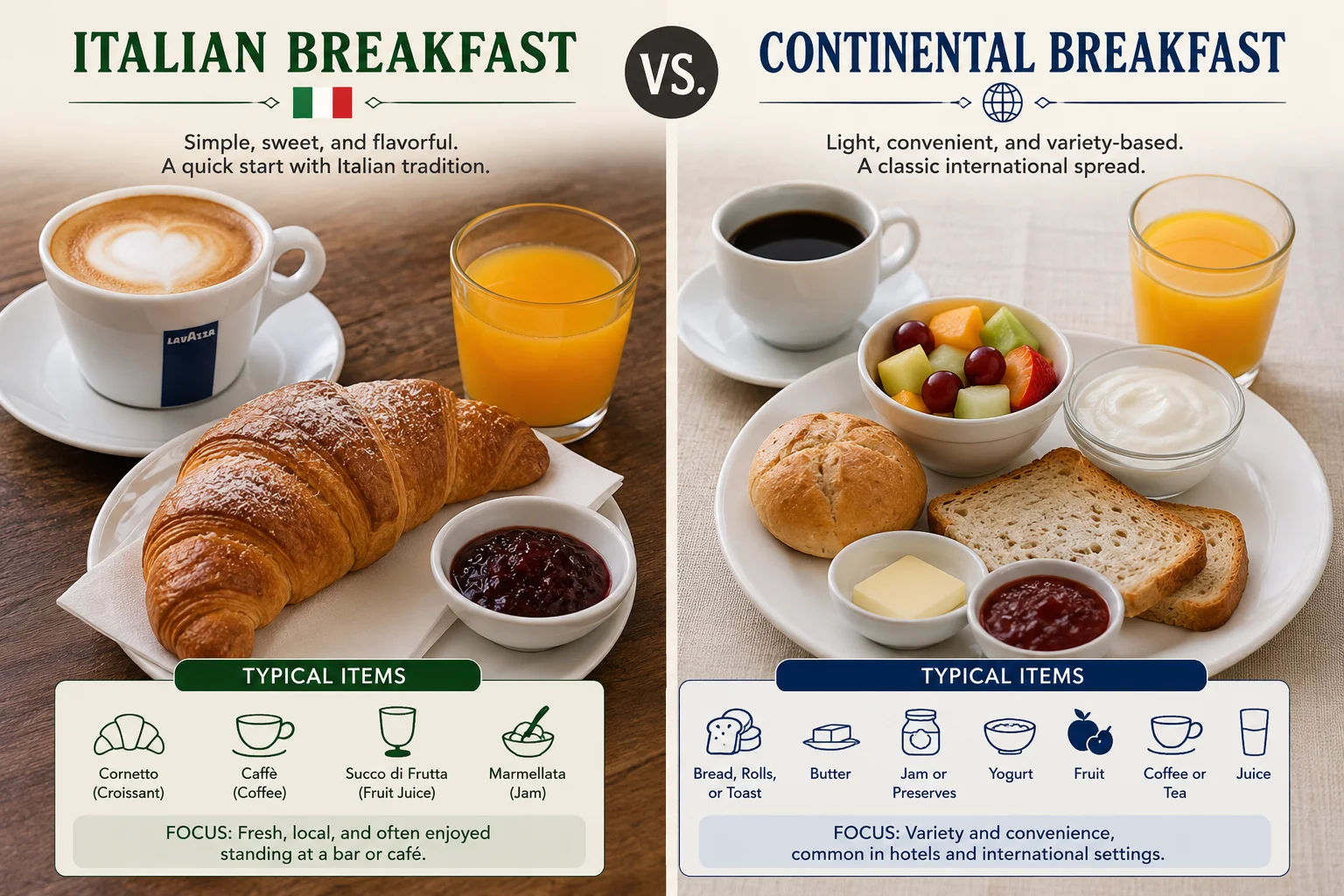
Many American hotels describe continental breakfasts, which are inspired by European breakfast foods.
Italian breakfast foods strongly influence continental breakfasts through:
- Pastries
- Bread and spreads
- Coffee and milk
However, Italian breakfasts are usually smaller and more focused on quality.
Love combining travel with great food? Visit beachnear.net to find the best beaches and nearby restaurants for an unforgettable coastal experience.
How to Enjoy Italian Breakfast Foods in the USA
Enjoying Italian breakfast foods at home in the U.S. is easy. Most ingredients are widely available at grocery stores or local bakeries. You don’t need special equipment or fancy recipes—just fresh, simple items.
To create an Italian-style breakfast, you can start with:
- Bakery croissants or soft brioche – Light and slightly sweet, perfect with coffee.
- Fruit jam or honey – Adds natural sweetness without being heavy.
- Plain or lightly sweetened yogurt – Healthy, creamy, and easy to pair with fruit or nuts.
- High-quality coffee – Espresso, cappuccino, or even a caffè latte brings the authentic Italian experience.
Italian breakfasts are quick and simple, making them ideal for busy weekday mornings. They’re also relaxing and enjoyable on weekends. You can mix and match foods depending on what you have at home. For example, pair yogurt with fruit and honey or enjoy a croissant with coffee for a classic Italian morning.
This approach gives you a light, balanced breakfast that provides energy, tastes fresh, and feels satisfying without being heavy. It’s a great way to start the day the Italian way, even in the United States.
Italian Breakfast Foods You Can Make at Home
Italian breakfasts are light, simple, and easy to prepare. Most traditional options use basic ingredients that many Americans already have at home. These breakfasts take only a few minutes to make, which makes them perfect for busy weekday mornings.
Here are some easy Italian breakfast foods you can make at home:
Toast with ricotta and honey
Warm toast topped with soft ricotta cheese and a drizzle of honey creates a creamy, lightly sweet breakfast. It feels satisfying without being too heavy and pairs well with coffee or tea.
Yogurt with fruit and nuts
Plain or lightly sweetened yogurt combined with fresh fruit and a small handful of nuts offers balanced nutrition. This option provides protein, natural sweetness, and healthy fats to help start the day with steady energy.
Warm milk with cookies
This is a classic comfort breakfast in Italy, especially for kids. Simple cookies or biscuits are dipped into warm milk. It is easy, gentle on the stomach, and quick to prepare.
Espresso with a small pastry
For adults, this is a common Italian morning choice. A small pastry adds a touch of sweetness, while the espresso provides a quick energy boost without a heavy meal.
These Italian breakfast foods require little preparation, use simple ingredients, and fit easily into American daily routines. They work well for rushed mornings during the week and feel enjoyable and relaxed on weekends.
Why Italian Breakfast Foods Are Popular in the USA
Italian breakfast foods are growing in popularity across the United States because they are:
- Easy to prepare
- Light and satisfying
- Family-friendly
- Café-inspired
Italian bakeries and coffee shops continue to introduce these breakfast foods to American audiences.
Final Thoughts on Italian Breakfast Foods
Italian breakfast foods offer a simple and enjoyable way to start the day. Instead of large portions, they focus on quality ingredients, light sweetness, and balanced flavors. This approach helps create a morning routine that feels satisfying without being heavy.
For Americans, Italian breakfasts provide a refreshing alternative to traditional, high-calorie morning meals. Options like toast with ricotta, yogurt with fruit, and coffee with a small pastry are easy to prepare and fit well into busy lifestyles.
By adding Italian breakfast foods to your daily routine, you can enjoy mornings that feel lighter, calmer, and more flavorful—bringing a small taste of Italy into everyday life.
Italian Breakfast Foods: FAQs
Q1: What is a traditional Italian breakfast?
Ans: A traditional Italian breakfast is light, quick, and usually sweet. Common foods include bread, toast, or small pastries like cornetti, jam or honey, and coffee drinks such as espresso or cappuccino. Children often drink warm milk. Savory foods like eggs or bacon are rare.
Q2: How is an Italian breakfast different from an American breakfast?
Ans: Italian breakfasts are smaller and simpler. While Americans often eat eggs, bacon, pancakes, or breakfast sandwiches, Italians focus on:
- Small portions
- Fresh pastries and bread
- Mild, simple flavors
- Coffee as the main drink
Breakfast is meant to provide gentle energy rather than a heavy meal.
Q3: What are popular Italian breakfast foods?
Ans: Some favorites include:
- Cornetto (Italian croissant): Soft, lightly sweet, sometimes filled with jam, cream, or chocolate
- Bread with jam (Pane e Marmellata)
- Biscotti or cookies (dipped in coffee or milk)
- Yogurt with fruit
- Milk-based breakfasts for children, like warm milk with cookies or cocoa
Q4: What types of coffee do Italians drink for breakfast?
Ans: Coffee is central to Italian breakfasts:
- Cappuccino: Milk-based, enjoyed before 11 a.m., paired with a pastry or cornetto
- Espresso: Small and strong, perfect for quick mornings at a café bar
- Caffè latte: Espresso with hot milk, usually enjoyed at home with toast or simple baked goods
Q5: Are Italian breakfasts healthy?
Ans: Yes. Italian breakfasts are usually light and balanced. Benefits include:
- Controlled portion sizes
- Simple, high-quality ingredients
- Minimal processed meat
- Steady energy without feeling too full
Q6: What Italian breakfasts are good for kids?
Ans: Kid-friendly Italian breakfasts are easy to eat and lightly sweet:
- Milk with cookies
- Bread with jam
- Yogurt with fruit
These foods provide gentle energy and comfort.
Q7: Can I make Italian breakfasts at home in the USA?
Ans: Absolutely. Ingredients are widely available. Easy options include:
- Toast with ricotta and honey
- Yogurt with fruit and nuts
- Warm milk with cookies
- Espresso with a small pastry
These breakfasts are quick, simple, and fit well into busy mornings or relaxed weekends.
Q8: Why are Italian breakfasts popular in the USA?
Ans: Italian breakfasts are gaining popularity because they are:
- Quick and easy to prepare
- Light yet satisfying
- Family-friendly
- Café-inspired
They offer a refreshing alternative to heavy American breakfasts.
Q9: How can Italian breakfasts improve my morning routine?
Ans: Italian breakfasts provide a lighter, balanced start to the day. With fresh pastries, yogurt, fruit, and coffee, mornings feel:
- Light and energizing
- Flavorful and comforting
- Quick and easy to prepare
This simple approach brings a small taste of Italy into everyday life.


1 Comment